

Region Värmland’s new Central Hospital, CSK, has high ambitions when it comes to sustainability. As part of the construction project, a sustainability programme has been developed to create a shared vision for the new CSK and to contribute to the UN’s global goals under Agenda 2030. The programme states that the new CSK should provide health-promoting and healing environments for everyone.
“It should be climate-smart, robust, and resource-efficient, and contribute to wider community benefits,” says Cecilia Alte, construction manager for the new CSK.
40 percent lower carbon footprint for the Reception Building
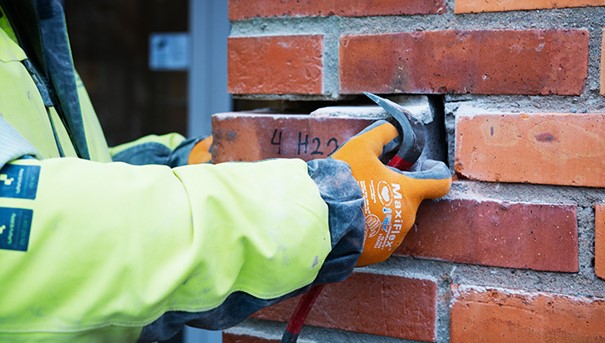
The Reception Building, which is the first permanent building in the new CSK project, has ambitious sustainability targets. It is Sweden’s first hospital building with a wooden frame, features 200,000 reused bricks in the façade, and is constructed using climate-smart concrete and reinforcement. Overall, the Reception Building is expected to have a 40 percent lower carbon footprint compared to the average for hospital buildings.
Reducing climate impact in production
Optimising and minimising the use of materials is the most effective way to reduce climate impact during production. Another approach is to replace products with more climate-friendly alternatives. To compare products and determine which are more environmentally friendly, they need to have an Environmental Product Declaration (EPD). Making climate-conscious choices is a key part of ensuring the sustainability of the new CSK.
Reduced waste and lower costs
The construction and building sector generates around 10 million tonnes of waste annually. One of the most important actions the industry can take for the climate is to prevent waste from occurring in the first place—for example, by protecting materials from weather conditions, sorting materials correctly, and ensuring that all materials are used efficiently.
“We aim to reduce waste and use resources efficiently throughout the entire process, from planning to procurement and logistics. This approach often leads to lower costs,” says Anja Skans, sustainability specialist at Skanska.
Reducing the number of transports
Transport is a necessary part of any construction project, but from a sustainability perspective, it is also one of the biggest challenges. The new CSK project is addressing this by investing in energy-efficient vehicles, using sustainable fossil-free fuels, and reducing traffic volumes through co-loading.
In simple terms, co-loading means fewer vehicles carrying full loads instead of many vehicles transporting partially filled loads. This results in fewer deliveries, safer workplaces, a better local environment, and reduced material damage.
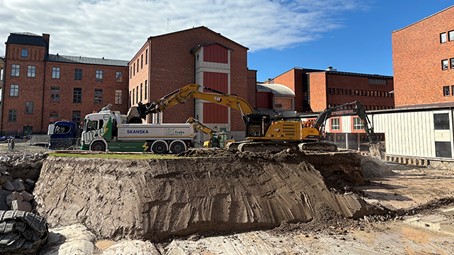
“Transport volumes will be high, so we aim to make them as environmentally friendly as possible. That’s why we have chosen to use an all-electric truck from LBC Frakt,” says Johanna Löfroth, project engineer at Skanska Väg & Anläggning.
Reusing and recycling furniture
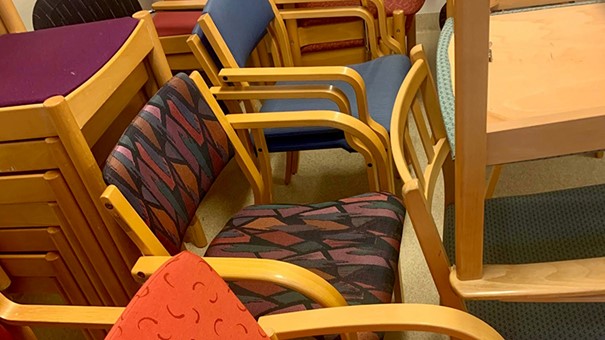
Dan Boström, an equipment planner at Region Värmland, works with inventorying furniture and equipment. The goal is to reuse and recycle as much as possible.
“We save a significant amount of money by reusing instead of buying new items. It’s also better for the environment and helps reduce our carbon footprint,” he says.
How does it work?
“We begin by identifying which furniture will be moved to the new location and which will remain. We then assess and rank the furniture based on quality, age, design, and ergonomics.”
Furniture that is not ergonomic or functional is repurposed for use in other settings. Items that cannot be used within the region are donated to various aid organisations or sent for recycling.
Facts
A construction project of this scale can—and should—make a difference for the climate and for future generations in Värmland.
- The construction and real estate sector is responsible for around 20 percent of Sweden’s total greenhouse gas emissions annually.
- Emissions from the construction of new buildings account for a significant share of a building’s total emissions.
- Efforts to reduce climate impact during the production phase have intensified since the introduction of the law on climate declarations for buildings in 2022.
This article was shared by ECIV partner Region Värmland
